
George Wynn, maternal relative, Battle of the Aisne, Sep 1914
George Wynn was born on the 15 February 1882 in Hunslet, Yorkshire, England and was Killed In Action during The Battle of the Aisne on the 14 September 1914.
George Wynn was a distant relative, by marriage, related to my Mother's side of the family. In fact, he was the brother-in-law of a 1st cousin 1x removed of the wife of a great-uncle of the wife of one of my 2nd cousins 3x removed.
The actual lineage was:
George Wynn 1882-1914 - brother-in-law of 1st cousin 1x removed of wife of a great-uncle of the wife of one of my 2nd cousins 3x removed
Caleb Wynn 1853-1901 - Father of George Wynn
Ellen (Nelly) Wynn 1879-1923 - Daughter of Caleb Wynn
John Brown Mountain 1871-1912 - Husband of Ellen (Nelly) Wynn
Thomas Mountain 1847-1907 - Father of John Brown Mountain
Clementina Wadman 1824-1858 - Mother of Thomas Mountain
Richard Wadman 1791-1853 - Father of Clementina Wadman
James Allen Wadman 1830-1870 - Son of Richard Wadman
Sarah Ann Wadman 1854-1938 - Daughter of James Allen Wadman
Sydney Newport Wicks 1850-1933 - Husband of Sarah Ann Wadman
Jacob Wicks 1795-1864 - Father of Sydney Newport Wicks
Henry Charles Wicks 1842-1896 - Son of Jacob Wicks
Agnes Wicks 1864-1950 - Daughter of Henry Charles Wicks
Florence (Florry) Lovinia Court 1886-1968 - Daughter of Agnes Wicks,
Frederick Henry Priday 1878-1963 - Husband of Florence (Florry) Lovinia Court,
Ellen Walker 1836-1922 - Mother of Frederick Henry Priday,
William Priday 1797-1883 - Father of Ellen Walker,
John Priday 1750-1831 - Father of William Priday,
Nathaniel Priday sr 1794-1870 - Son of John Priday,
Nathaniell Priday 1830-1900 - Son of Nathaniel Priday sr
Joseph (Joe) Priday 1853-1933 - Son of Nathaniell Priday,
Joseph Priday 1887-1954 - Son of Joseph (Joe) Priday
Alice May Priday 1917-2009 - Daughter of Joseph Priday
William G Hyde - Me
His Family
George Wynn's father was Caleb Wynn, born during July 1853 in Bridgewater, Somerset, England and died in March 1901 in Bramley, Yorkshire West Riding, England.
Caleb Wynn married Emily Davis (b. July 1848 in Leeds) at St Pauls, Leeds on 22 October 1877.
Prior to the wedding, Caleb & Emily were living next door to each other at 3 Smith Court (Caleb) & 4 Smith Court (Emily), Fountain St, Leeds.
Emily was a widow, having married Stephen Downey in Leeds in January 1869. Stephen Downey, b. 1848 in Ireland worked in the Cloth Mills in Leeds and fathered 2 children with Emily:
- James Downey, b. 5 Feb 1869, 11 Feb 1950
- Mary Hannah Downey, b. April 1872, d. June 1939
Caleb & Emily, set up home at 9 Fountain Court, Leeds and caleb became an Iron Puddler (a well paid but exhausting physical job) at a local Iron works.
They raised their own family of 6 children:
- James Downey Wynn, b. Mar 1869, d. Mar 1950
- Mary Hannah Wynn, b. Apr 1872, d. Jun 1939
- Ellen (Nelly) Wynn, b. Jan 1879, d. Apr 1923
- George Wynn, b feb 1882, d. Sep 1914
- William Wynn, b. 1886, d. Feb 1917 (also WW1)
- Mary Ann Wynn, b. Feb 1889, d. Jun 1953
By 1891, Caleb & Emily had moved to 16 La Haye Saints St, Wortley, Yorkshire and Caleb is now described as a Forgeman, Puddler (Iron), perhaps the forgeman bit was a promotion of sorts, all I know is that is still very physically demanding heavy work.
4 of the children are still at home and all attend school:
- Ellen (Nelly) Wynn, b. Jan 1879, d. Apr 1923
- George Wynn, b feb 1882, d. Sep 1914
- William Wynn, b. 1886, d. Feb 1917 (also WW1)
- Mary Ann Wynn, b. Feb 1889, d. Jun 1953
In addition, the family now includes Emily & Stephen Downey's child, Mary Hannah Downey (cloth weaver) and her daughter Emily, born in 1891 & who sadly also died in 1891.
By March 1900, Caleb was shown to be living at 17 Oswald St, Guiseley, Leeds, following the death of his wife, Emily on 21 February that year.
Of the four children who had lived at home at the time of the last Census in 1891, Ellen (Nelly) Wynn was still at home but would soon move in with her sister, Mary Ann Wynn and would eventually marry John Brown Mountain at St John the Baptist, New Wortley, Leeds on 18 Feb 1906; George had joined the British Army (see below) and William was at home but following the death of mother & father would also move in with his 2 sisters, Ellen (Nelly) and Mary Ann.
His Military
George Wynn was a professional soldier, having joined the British Army on 15 March 1900.
He enlisted, for 7 years, at Leeds, Yorkshire as a Private in the 1st Battalion, Kings Own Scottish Borderers and was allocated Regimental Number 7093.
The 1st Battalion, Kings Own Scottish Borderers was a permanent unit and formed part of the standing British Army, ready to enbark at releatively short notice for trouble spots the world over, where Britain had interests it wished to maintain.
Second Boer War
After initial training and being kitted out with all the uniform and paraphanalia needed for army life, George Wynn was amongst the 998 officers and men of the 3rd (Militia) Battalion who embarked the SS Kildon Castle bound for South Africa and the Second Boer War in late March 1900. He transferred to the 1st Battalion on arrival in South Africa.
George Wynn's military records show that he was in South Africa on 28 June 1900 and remained there with the Battalion until 5 Mar 1902, when most of their number returned to England.
The 1st Battalion, Kings Own Scottish Borderers sailed on the Braemar Castle and Goorkha at the beginning of January 1900, and arrived at the Cape about the 26th. Along with the 2nd Norfolk, 2nd Lincoln, and 2nd Hampshire, they formed the 14th Brigade under Brigadier General Chermside, and part of the VIIth Division under Lieutenant General Tucker.
In the fighting which took place between 18th February, The Battle of Paardeberg and the 27th, when Cronje surrendered, the KOSB were several times sharply engaged, particularly on the 23rd, and did most excellent work in repelling and defeating the Boer forces coming to Cronje's assistance.
Two officers, 2 non-commissioned officers, and 1 private were mentioned in Lord Roberts' despatch of 31st March 1900.
In the action at Karee Siding, fought on 29th March, to clear some hills held by the Boers north of Bloemfontein, the KOSB had very heavy work, losing 1 officer and 14 men killed, and 3 officers and 42 men wounded. George Wynn, was most probably a replacement for one of thse men.
When Uitval Nek, garrisoned by the Lincolns, was attacked on 11th July, the KOSB were hurriedly despatched from Pretoria to their assistance, but they did not succeed in arriving before the post fell.
In July 1900 a fresh brigade was put together under Colonel G G Cunningham, DSO, of the Derbyshire Regiment, consisting of the KOSB, 2nd Berks, 1st Border Regiment, and 1st Argyll and Sutherland Highlanders; and this brigade, along with Hickman's Mounted Infantry, the Canadian and Elswick batteries, two 6-inch howitzers and 5-inch guns, was placed under Lieutenant General Ian Hamilton. His force was ordered on 16th July to go twenty-five miles north of Pretoria, then swinging to its right, it formed the extreme left of the army for the eastern advance, Mahon coming in between Hamilton and the centre. On 21st July Mahon and Hamilton combined at Doornkraal, Hickman returning to Pretoria with empty waggons. On 22nd July the force was seven miles north of Bronkhorst Spruit, and on the 25th Balmoral was occupied. Immediately after this Hamilton's force, with Mahon, was ordered back to Pretoria to operate against the enemy in the Rustenburg district. He left Pretoria on 1st August, and on the 2nd had some stiff fighting at Uitval's Nek, where the troops behaved splendidly, two companies of the Berkshires climbing a steep cliff overlooking the pass on the east. This caused the Boers to flee, abandoning waggons and horses. The KOSB got back to Pretoria about the end of August, after a march which all who took part in it will remember on account of the extreme modesty of the rations. So scanty was the supply that before Pretoria was reached the health and fitness of the brigade was becoming affected. After two days' rest and hurriedly refitting the column set off towards another destination, Belfast on the Delagoa rail line.
The battalion, like many other regiments, was told to garrison some stations and posts on that railway when the brigade arrived at Balmoral on 4th September.
Twelve officers and 20 non-commissioned officers and men were mentioned in Lord Roberts' final despatch.
In 1901 the battalion was brought into Pretoria, and early in May was taken to Krugersdorp. At Nauwpoort Nek they joined a column under Brigadier General Dixon, himself an old Borderer. The column operated in the dangerous Megaliesberg district. At Vlakfontein on 29th May 1901 Dixon's force was fiercely attacked; four companies of the KOSB were present, but the fighting chiefly fell to some of the Derby Regiment, who were with the left and rear, the points attacked. Colonel Kekewich, who had been in command at Kimberley, took over the column, which continued to hunt the kloofs, dongas, and spruits of the Megaliesberg with wonderful success. In his despatch of 8th September 1901 Lord Kitchener, referring to a capture on 10th August of 40 Boers, including Mr Wolmarans, chairman of the late Volksraad, says, "The majority of these prisoners, who were fully equipped with rifles, horses, and saddlery, were taken by the Volunteer Service company of the KOSB under Major Mayne". Major Mayne and several men were commended in despatches for this affair.
In September 1901 the battalion relieved the West Yorkshire Regiment on the Mooi River blockhouse line.
In January 1902 Major Mayne superintended the construction of a new line. Several attacks were made on the line in April and May. On the 13th May President Shalk-Burgher, Generals Delarey, Kemp, and Celhers, and other prominent Boers, came into the blockhouse line and were escorted to Krugersdorp on the way to the peace discussion.
The Mounted Infantry company of the regiment did much hard work and had some stiff fighting, particularly at Lambrechtfontein, Orange River Colony, 18th May 1901, when they had eight casualties.
Several members of the company gained mention during the campaign for very excellent work. In the final despatch 3 officers and 3 non-commissioned officers of the battalion were mentioned.
(Boer War information from https://www.angloboerwar.com)
Return to England
On 5 Mar 1902, the battalion returned to England and went into their depot for refit of uniforms, weaponary & personnel.
Although George had signed on for another year (making 8 years enlisted at that time), on return to England, he was released by the Regiment and placed n the Army Reserve (which meant, as an already enlisted man with 2 years left of his enlistment, he could be called up at any time, but specifically at a time of emergency).
George settled in the Holbeck area of Leeds and in 1911 we find him living at 2 Port Street, Holbeck, Yorkshire West Riding. He was still single and his occupation was a Coal Miner.
World War 1 Declared
On the 4th August 1914, Great Britain declared war on Germany and it's allies and mobilised it's standing Army, which in turn resulted in all Army Reserve members being called back to service.
George reported to Berwick on Tweed in Northumberland, where he was allocated to the strength of the 2nd Battalion of the Kings Own Scottish Borderers, equipped (uniform, personal kit, weaponary) and shipped off to France with the rest of the BEF (British Army Expeditionary Force) to take the fight to the enemy.
On 6 August, the Cabinet agreed to send four infantry divisions and one cavalry division of the BEF to France immediately, with another to follow. One division was retained in Britain for home defence and to deal with any civil unrest, which had been a prominent feature of British life prior to the war. Mobilisation went extremely smoothly. Embarkation for France began on 9 August and the BEF was assembled at its concentration point of Maubeuge by 20 August. The force was commanded by Sir John French and was initially divided into two corps, each of two divisions; 1 Corps was commanded by Sir Douglas Haig and ll Corps was commanded by Sir Horace Smith-Dorian, who replaced Sir John Grierson, after his sudden death on reaching France. A fifth division landed in France on 22 August.
War Plans
Germany’s only plan for war, the Schlieffen Plan, was based on the fact that Germany would be faced with a war on two fronts against France and Russia, but that Russia would be slower to mobilise its army. Germany planned to defeat France within six weeks by an attack of overwhelming force, passing through Belgium, sweeping down through Northern France to outflank French defences, take Paris and attack the French armies in the rear. Following the defeat of France, Germany would be able to meet the expected onslaught from Russian armies in the East. On the outbreak of war two German armies, the 1st, commanded by General Alexander von Kluck, and the 2nd, commanded by General Otto von Below, began their move to wheel in a sweeping arc through Belgium and Northern France. The commander responsible for putting this plan into operation in August 1914 was the German Chief of Staff, Helmuth von Moltke.
France’s war plan, Plan 17, was for a direct attack against the German frontier into Alsace and Lorraine. The French commander Joffre was aware that a German attack through Belgium was possible, but France and her ally Russia believed that immediate, simultaneous attacks would place Germany at an immediate disadvantage and disrupt German war plans. Five French armies were ranged along the border with Germany and the BEF was placed on the left flank of the of these, immediately to the left of the 5th French Army.
The Battle of Mons and the Retreat
The BEF prepared to join the French advance to the East, but the weight of two German armies sweeping down from the North forced the French 5th Army to pull back to the West, leaving the BEF ahead of the French armies and dangerously exposed on either flank. However, in a meeting with Lanrezac, commander of the French 5th Army, Sir John French agreed to hold the line of the Mons Condé canal for twenty four hours on 23 August to cover the French withdrawal. Strung out along a twenty mile length of canal, the BEF was very exposed and faced the main German onslaught through Belgium. The main German assaults began at 9am and were mainly against the ll Corps. After some desperate fighting, by the afternoon ll Corps began to fall back from the canal line and at 1am on 24 August Sir John French gave the order for a general retreat. British losses were 1,600, almost all from II Corps, while German losses are not certain, but were probably between 6000 and 10,000.
Disengaging from an enemy to effect a withdrawal is traditionally a very difficult operation, but this was carried out successfully along most of the battlefront. There was, however, a costly battle at Elouges on 24 August to protect the withdrawal of II Corps in which the BEF’s losses were greater than at Mons itself. Between 24 August and 5 September, in the heat of Summer, an army of nearly 100,000 men retreated 200 miles along narrow pavé roads with all of their equipment, transport and horses. Throughout this time they were relentlessly pursued by a massively superior German force. The achievement of the BEF in maintaining its discipline and the feat of organisation and supply is remarkable. On several occasions the BEF was forced to fight rear-guard actions . The largest of these actions was at Le Cateau on 26 August and was made by the II Corps and III Corps against the First German Army . At Étreux on 27 August a small British force held a crossing over the Sambre Canal against the German 2nd Army, allowing I Corps to continue its retreat. During this action the 2nd Battalion of the Munster Fusiliers was completely wiped out. On 1 September, an intense close quarter action took place in the forest at Villers Cotterêts involving the 4th (Guards) Brigade, who were the rear guard of I Corps. On the same day 15 miles away at Néry, the 1st cavalry brigade defeated an attack by a whole German cavalry division in what became one of the most well-known incidents of the retreat.
Battle of Marne
As the French 5th Army and the BEF retreated, the (German) Schlieffen Plan began to unravel. The plan contained several inherent flaws and, as the French and the BEF retreated, the German 1st and 2nd armies were drawn to the South and the East, instead of wheeling to the West as planned. This resulted in the 1st Army passing to the East of Paris. The French commander, Joffre, saw a major opportunity to halt the German advance. The German 1st Army was open to an attack in its flank from the direction of Paris in the West. If the Germans were attacked from the West and, at the same time the French 5th Army and the BEF halted their retreat and attacked from the South, the German 1st and 2nd armies would be forced to withdraw. Joffre began to assemble a new French 6th Army around Paris in order to put his plan into operation.
Sir John French, however, was not contemplating joining an advance. His resolve had been badly shaken during the retreat and he now wished to completely withdraw the BEF from the line for a period of recuperation. The Secretary State for War, Lord Kitchener, made a visit to French in an attempt to stiffen his resolve and after a personal appeal from Joffre, French, consented to join the general advance.
The French 6th Army began its advance against the Germans on 5 September, beginning The Battle of the Marne. The battle was fought between the 5 and 12 September and is arguably the most important battle of World War 1. By its end, the Germans had begun a general withdrawal along a 250 mile front and The Schlieffen Plan was dead. Germany had failed to gain a quick victory, which was her only guarantee of victory. Germany now faced the prospect of a long drawn out war and the balance of resources against her made it very doubtful that this was a war which Germany could win.
The British Expeditionary Force suffered almost 13,000 casualties during the Battle of the Marne, of whom some 7,000 had been killed.
The Battle of the Aisne
The German retreat ended along the line of the River Aisne. The Germans dug in along the heights behind the river and created a system on trenches protected by belts of barbed wire and defended by machine guns and artillery. The trench line soon extended South to the Swiss frontier. The German retreat had resulted in a wave of Allied optimism and some senior commanders had envisaged driving the Germans back to their borders. However, in a series of costly attacks over two weeks, known as The Battle of the Aisne, the French and British failed to penetrate the German defences. Trench warfare had begun and the deadlock in which it resulted was not to be broken until the Spring of 1918.
12–15 September
When the Germans turned to face the pursuing Allies on 13 September, they held one of the most formidable positions on the Western Front. Between Complegne and Berry-au-Bac, the Aisne River winds westward and is about 100 feet wide, ranging from 12–15 feet deep. Low-lying ground extends one mile on each side, rising abruptly to a line of steep cliffs 300–400 feet high, then gently levelling to a plateau. The Germans settled on the higher northern side 2 miles beyond the crest, behind a dense thicket that covered the front and slope. Low crops in the unfenced countryside offered no natural concealment to the Allies. Deep, narrow paths cut into the escarpment at right angles, exposing any infiltrators to extreme hazard. The forces on the northern plateau commanded a wide field of fire.
In dense fog on the night of 13 September, most of the BEF crossed the Aisne on pontoons or partially demolished bridges, landing at Bourg-et-Comin on the right and at Vwnizel on the left. At Chivres-Val east of Venizel, there was an escarpment the Germans had selected as their strongest position. The French Fifth Army crossed the Aisne at Berry-au-Bac and captured the eastern tip of Chemin des Dames, a steep ridge named after the royal coach road Louis XV had built for his daughters. Contact was established along the entire front. East of Chemin des Dames, the French Fourth, Fifth and Ninth armies made only negligible progress beyond the positions they had reached on 13 September. Under the thick cover of the foggy night, the BEF advanced up the narrow paths to the plateau. When the mist evaporated under a bright morning sun, they were mercilessly raked by fire from the flank. Those caught in the valley without the fog's protective shroud fared no better.
It soon became clear that neither side could budge the other and since neither chose to retreat, the impasse hardened into stalemate, that would lock the antagonists into a relatively narrow strip for the next four years. On 14 September, Sir John French ordered the entire BEF to entrench, but few entrenching tools were available. Soldiers scouted nearby farms and villages for pickaxes, spades and other implements. Without training for stationary warfare, the troops merely dug shallow pits in the soil. These were at first intended only to afford cover against enemy observation and artillery fire. Soon the trenches were deepened to about seven feet. Other protective measures included camouflage and holes cut into trench walls then braced with timber.
During the entrenching, on September 14, George Wynn was Killed in Action, however his body was never found, assumed obliterated by the intesive shelling from the Germany positions.
The British Expeditionary Force suffered almost 13,000 casualties during the Battle of the Marne (inc the Battle of the Aisne), of whom some 7,000 had been killed.
His Burial
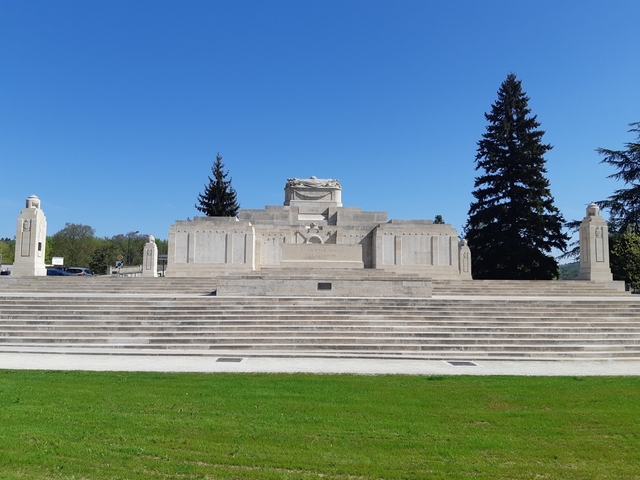 George Wynn is commemorated on the La Ferté-sous-Jouarre Memorial to the Missing.
The La Ferté-sous-Jouarre Memorial commemorates 3,740 officers and men of the British Expeditionary Force (BEF) who fell at the battles of Mons, Le Cateau, the Marne and the Aisne between the end of August and early October 1914 and have no known graves. The monument is constructed of white Massangis stone and surmounted by a sarcophagus onto which military trophies are laid. At the four corners of the pavement on which the monument stands are stone columns supporting urns which bear the coats of arms of the four constituent nations of the United Kingdom. The memorial is situated on land provided by Adrien Fizeau, sometime Mayor of Jouarre, in memory of his father, Hippolyte Fizeau, the distinguished scientist, Member of the Institut de France and of the Royal Society. It was designed by George H. Goldsmith, a decorated veteran of the Western Front, and unveiled by Sir William Pulteney, who had commanded the III Corps of the BEF in 1914, on 4 November 1928.